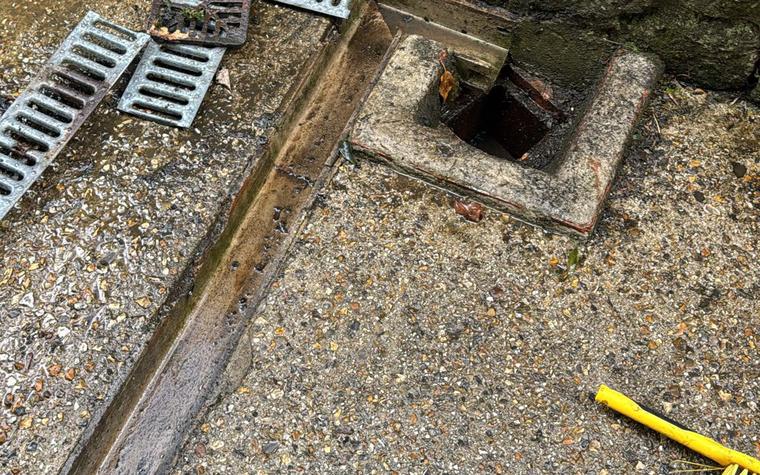
Why does my driveway flood when it rains?
Usually the channel drain across it has silted up, or the gully it runs into is full, or the soakaway at the end has stopped taking water. The three look identical from the surface and want completely different work, so the first job is finding out which one you have got, and that is usually a lifted grate and ten minutes rather than a survey.
How often should channel drains be cleared?
Once a year suits most domestic driveways, ideally in autumn before the leaves come down and the weather turns. Commercial yards and anywhere with a lot of grit or vehicle traffic want it more often. If yours has flooded once, treat that as the reminder to put it on a yearly footing.
Can you clear a soakaway?
We can clear and jet the run into it and vacuum out what has silted the chamber, and on a lot of jobs that restores it. A soakaway that has genuinely failed, because the ground around it is saturated or it has silted solid over decades, needs digging out and rebuilding rather than clearing, and a camera and a water test will tell us which it is.
My gully smells. Is that a blockage?
Often, yes. A gully trap holds a water seal that stops drain smell coming back up, and when it silts up or dries out that seal fails. Clearing and re-charging the trap fixes most of them. If the smell persists after that, something further down the run wants looking at with a camera.
Do you clear commercial yard drainage?
Yes, and it is worth putting on a schedule. Yard gullies and channel runs on commercial sites take far more grit than a domestic driveway, and a flooded loading bay costs a lot more per hour than a planned visit. We work outside trading hours where it suits the site.